


Ribeiro Frio: Madeira’s Cold-Stream Escape into Misty Forests and Trout-Filled Levadas
Discover an enchanting valley where ancient laurel forests, scenic levada walks, and a century-old trout farm create a unique blend of adventure and serenity.
Good To Know
Ribeiro Frio: Where Madeira’s Cold River Meets Misty Forests and Curious Fish
Introduction – A Cold Stream and a Warm Welcome
Hidden in the humid mountains of north‑east Madeira lies a place whose name literally means “cold stream.” Ribeiro Frio is both a village and the valley it sits in, carved by a crystalline river. Once little more than a clearing in a dense laurel forest, it has evolved into a popular stop for hikers and bird‑watchers. Visitors come to stroll along ancient irrigation channels, peer into trout pools and enjoy simple meals at roadside taverns. Ribeiro Frio’s story spans centuries – from colonial irrigation projects and the exploitation of forests to modern conservation of endangered species – demonstrating how a small valley reflects the island’s broader history.
From Remote Clearing to Tourist Outpost
Before the Portuguese settled Madeira in the 15th century, the island was entirely cloaked in evergreen laurel forest. Early colonists quickly sawed and burned large swathes of the Laurissilva to make space for sugar cane fields and to harvest timber for shipbuilding. The north of the island received more rain than the south, so farmers carved irrigation channels called levadas to funnel water to drier plantations. Some of the oldest channels cross the valley of Ribeiro Frio, including the Levada do Furado, which was constructed in the 18th century. These watercourses allowed the cultivation of sugar cane, bananas and wine in parched areas by carrying water from the rainy mountains down to the south.
Ribeiro Frio remained a remote outpost for centuries, used mainly by woodcutters, resin collectors and levadeiros (levada maintenance workers). The cold stream that gives the area its name feeds not only the levada network but also a freshwater fish nursery. In the mid‑19th century the valley began attracting early tourists and nature lovers. An article from the Santana municipal archive notes that Ribeiro Frio became “an important tourist centre” around this time because it provided access to the Balcões viewpoint and to curious natural features such as a basalt pillar known as Homem‑em‑Pé. To accommodate visitors, a shelter was built for travellers and levada workers. In April 1932, a quaint Casa de Chá (teahouse) opened to offer hot drinks and light refreshments in the cool mountain air. Over time, more amenities appeared, including a roadside restaurant and souvenir stalls, turning the once‑isolated watering hole into a welcoming pit stop.
When Laurel Reigns: The Laurissilva Forest
Ribeiro Frio lies inside the Laurissilva forest, a relic ecosystem that once covered much of southern Europe. UNESCO notes that Madeira’s Laurissilva is the largest remaining laurel forest, with about 90 % of it still in a near‑natural state. The forest plays a crucial role in collecting moisture from the Atlantic trade winds and releasing it slowly into springs and streams. This “cloud sponge” helps sustain agriculture and protects against erosion.
The valley’s steep slopes are cloaked in a mix of evergreen trees such as laurel, til and Madeira mahogany. Under their canopy grow mosses, ferns and colourful flowers like endemic orchids and foxgloves. This patchwork habitat shelters rare birds including the tiny Madeira firecrest and the shy Trocaz pigeon. Visitors often encounter curious Madeira chaffinches that hop onto railings hoping for crumbs. The abundance of endemic species and the forest’s role in the island’s hydrology explain why the Laurissilva became a UNESCO World Heritage Site.
Levadas – Lifelines of the Island
To channel water from rain‑soaked mountains to thirsty fields, Madeirans carved narrow irrigation channels known as levadas. Some of the island’s oldest levadas, including the Levada do Furado built in the 18th century, run through Ribeiro Frio. They carry water to farms in Porto da Cruz and São Roque do Faial and once supplied sugar cane, bananas and wine. Farmers also used laurel leaves for compost and resin for sealing barrels. Without these channels, agriculture on the steep slopes would have been impossible.
For modern visitors, levadas are scenic walking routes. The Vereda dos Balcões (PR 11) follows the Levada da Serra do Faial for 1.5 kilometres to an airy viewpoint. This flat path cuts through Laurissilva forest and is easy enough for families. Longer levada hikes head deeper into the mountains, offering glimpses of waterfalls and tunnels. The levadas that once fed crops now feed hikers’ hunger for adventure.
Fish in the Mountains: The Trout Farm
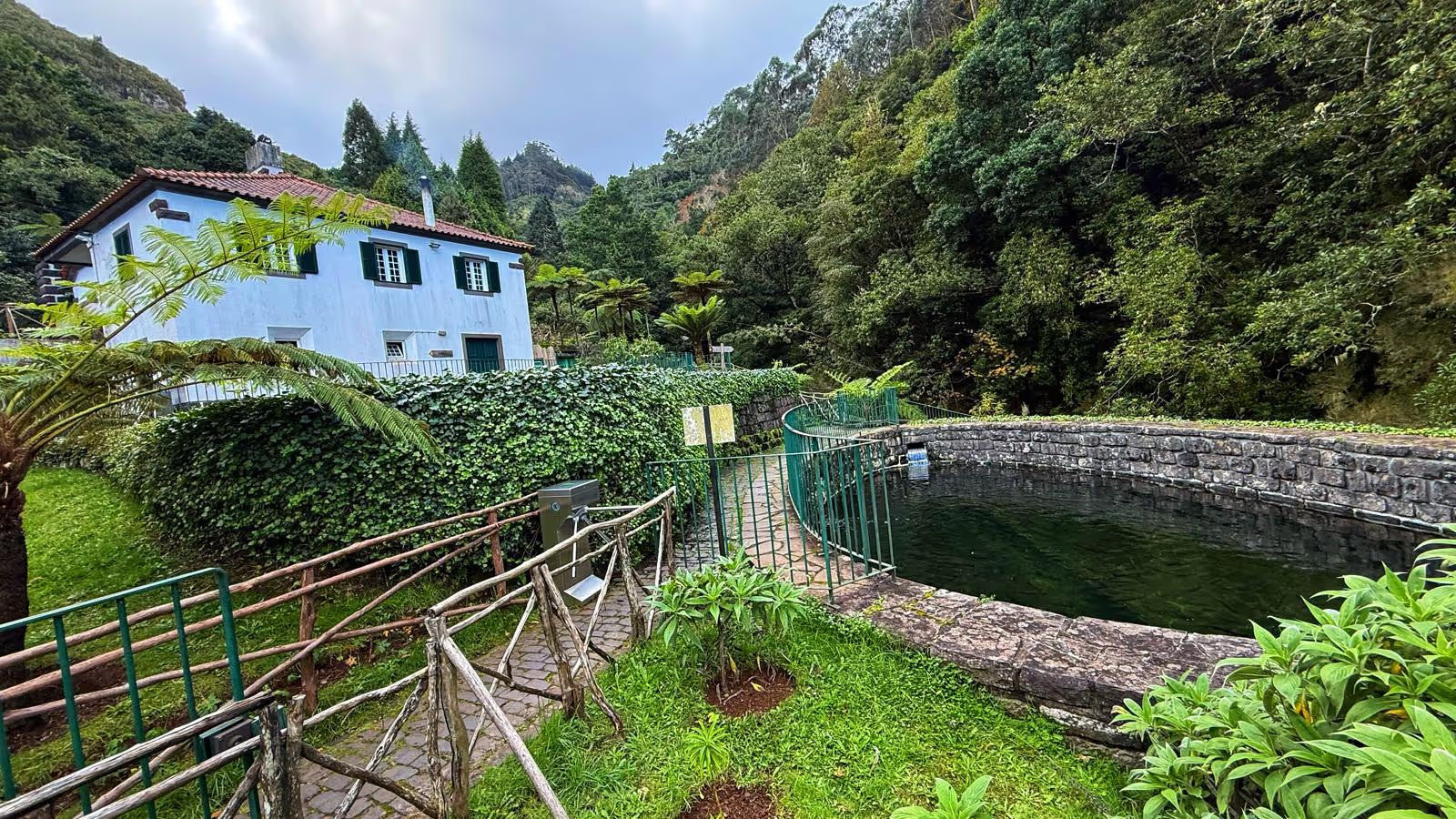
In the 1950s the authorities built a small aquaculture centre at Ribeiro Frio to breed rainbow trout and restock the island’s streams. Fed by the cold mountain river, a series of stone tanks holds fish at different stages of growth. While the project was created to strengthen fish populations, it quickly became a curious attraction: visitors peer into the clear water and learn about sustainable fish farming. Nearby restaurants serve fresh trout cooked over wood coals, a delicious way to taste the mountain’s bounty.
Balcões Viewpoint – A Balcony Over Madeira
The reward at the end of Vereda dos Balcões is a wooden platform that hangs over the Ribeira da Metade valley. From this “balcony” hikers look out across the central mountain range; on clear days the peaks of Pico do Areeiro, Pico das Torres and Pico Ruivo stand above a carpet of forest. To the east, the rock of Penha d’Águia punctuates the coastline. Along the short approach trail, tame finches flutter nearby and panels describe the laurel trees that dominate the forest. A sturdy railing at the viewpoint allows visitors to lean safely over the drop while scanning for birds and waterfalls.
Modern Life: From Logging to Conservation
Centuries ago Madeira’s forests were logged for ships and fields, but parts of Ribeiro Frio survived because the valley became a tourist destination. Residents once harvested wood and resin, but today most livelihoods centre on eco‑tourism, hospitality and handicrafts. The 1932 teahouse now lies in ruins, yet restaurants still serve skewered beef, homemade bread and grilled trout. Vendors sell liqueurs, jams and carvings to passing hikers. Conservation fees collected on the Balcões trail help maintain paths and fund projects to remove invasive species and plant native trees. The trout farm continues to restock streams and educate visitors.
Other Trails and Hidden Corners
Although the Balcões viewpoint is the star attraction, the hills around Ribeiro Frio are laced with other paths. The Levada do Furado (PR 10) meanders toward Portela and leads into wild, humid forest. Adventurous hikers can continue beyond waterfalls such as Caldeirão Verde. Another trail visits the basalt column called Homem‑em‑Pé, a natural pillar that has intrigued visitors since the 19th century. From parts of the Balcões trail you can even glimpse the Fajã da Nogueira hydroelectric plant, a reminder that Madeira’s rivers are still harnessed for power as well as irrigation.
A Tale of Two Parishes
Ribeiro Frio straddles a municipal boundary. The trout farm and forest park lie within Porto da Cruz, part of the Machico municipality, while the restaurants and souvenir stalls belong to São Roque do Faial in the Santana municipality. Visitors notice little difference as they cross the street. They are more likely to focus on simple pleasures – buying locally made liqueur, sampling honey cake or chatting with artisans who sell carved laurel spoons. The blend of nature, culture and gastronomy makes Ribeiro Frio feel both remote and welcoming.
Conclusion – A Cold Stream with a Warm Heart
Ribeiro Frio may not appear on many maps, yet it epitomises the beauty and resilience of Madeira. Its history mirrors that of the island: original forests felled and replanted, water diverted through levadas to feed crops, and remote valleys transformed into destinations for curious travellers. The Laurissilva surrounding Ribeiro Frio is a living time capsule, sheltering ancient tree species and rare birds. The trout farm tells a story of resourcefulness and sustainability, showing how humans work with nature to replenish streams. The Balcões viewpoint offers a balcony onto the island’s rugged heart, where peaks pierce the clouds and finches land on outstretched palms. Whether you come for a brisk hike, a wildlife encounter or a plate of fresh trout, Ribeiro Frio will leave you with a sense of wonder and a deeper appreciation for the cold stream that nurtures so much life.
Highlights
The only pass you need in paradise
BANANA JOE SAVES THE DAY!
Episode 1: The Blocked Levada

A huge boulder has blocked the levada. Farmer Manuel's banana plants have no water!
MADEIRA NEEDS
YOUR HELP!
Are you ready to save the levada?


