Feeding the Future: Madeira’s Offshore Fish Farm on the Island’s Sunny Southwest
Introduction: Looking Beyond the Horizon
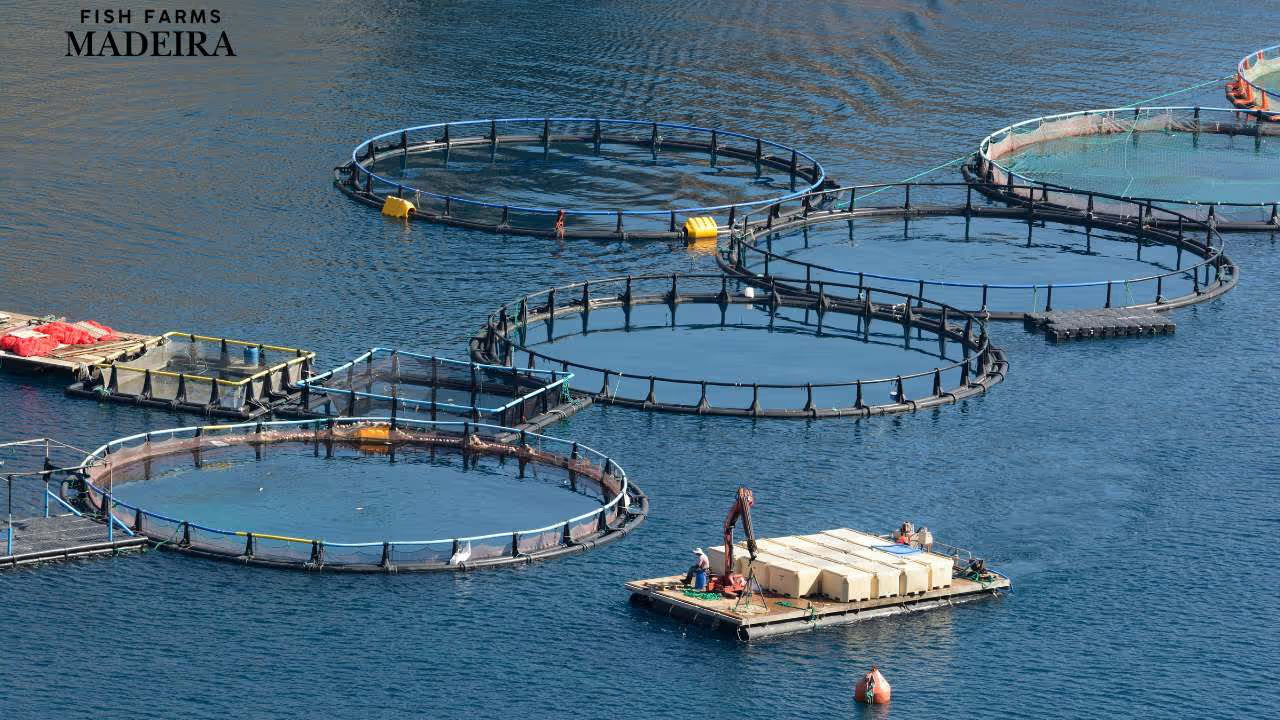
Madeira’s south‑west coast is famous for sun‑drenched terraces, banana plantations and holiday resorts. Lurking just beyond the surf line, however, is a less familiar but increasingly important feature of the island’s blue economy: an offshore fish farm comprised of floating cages. These cages, anchored off Arco da Calheta on the sheltered south‑west side, are part of a story that blends pioneering engineering with regional food security. Since the mid‑1990s, Madeira has experimented with open‑ocean aquaculture to diversify its economy, reduce dependence on imports and relieve pressure on wild stocks. This article traces the evolution of the southwest fish farm, explains the science behind its operations, assesses environmental and social impacts and explores plans for a more sustainable future.
From Experiment to Enterprise: Early Days of Open‑Ocean Farming
The idea of farming fish offshore might seem obvious today, but in the early 1990s it was bold and untested. Madeirans had long relied on the ocean as a source of fresh fish but were also acutely aware that Europe's appetite for seafood was growing faster than the supply of wild stocks. Dr Carlos Andrade, then head of the fisheries directorate’s experimental unit, persuaded regional authorities to launch a pilot project in 1995 using floating cages moored several hundred metres off the coast. The trial produced around 100 tonnes of fish in 1996 and demonstrated that the island’s mild climate and sheltered bays could support marine aquaculture.
Selecting a species for this first venture was a calculated gamble. Farming local species had never been attempted and there was little data on their biology. Andrade’s team therefore opted for gilthead sea bream (Sparus aurata), a Mediterranean species already raised commercially. It was hardy, tolerant of varying salinity and commanded a good market price. The success of the pilot proved that open‑ocean cages could withstand Madeira’s Atlantic swells, albeit with considerable effort – the salty, turbulent environment rapidly corrodes equipment, waves make feeding difficult and workers can only approach the cages during calm windows. Nevertheless, the project laid the groundwork for the island’s commercial farms.
Establishing the Calheta Mariculture Centre
Following the pilot, the government invested in infrastructure to scale up production and regulate private companies. In 2000, the Calheta Mariculture Centre (Centro de Maricultura da Calheta) opened adjacent to Arco da Calheta. Operated by the Regional Directorate of Fisheries, the centre functions as a hatchery and research hub: scientists rear juvenile fish in controlled tanks, study feeding regimes and disease management, and then sell fingerlings to local farmers. A 2017 report by Monaco Explorations described the centre as an “aquaculture research facility and fish hatchery” that provides scientific and regulatory support, noting that three commercial farms operated under its supervision while a fourth was under construction.
The centre’s role is not merely to supply fingerlings. It sets standards for cage design, feed composition and environmental monitoring. Each year a few million fry are reared and gradually acclimatised to seawater before being transferred to sea cages. During the transfer process mortality can be as high as 3–5 % because transport stresses juvenile fish. To break parasite cycles and improve fish health, the hatchery shuts down for two months a year and sterilises its systems. In addition to sea bream, researchers have experimented with European sea bass (Dicentrarchus labrax) and are assessing the feasibility of farming native wrasse and other herbivorous fish to diversify production and reduce feed costs.
Anatomy of an Offshore Fish Farm
Approaching Arco da Calheta from the cliff‑top road, visitors can spot two parallel lines of circular cages floating about 800 metres offshore. These structures belong to Marismar, the main operator in the area. A 2019 environmental survey described the layout: ten cages arranged in two rows, with diameters ranging from 12.7 metres to 25.5 metres and nets hanging roughly 10 metres deep. The cages are moored to the seabed, which slopes to around 40 metres depth, and connected by catwalks and feeding pipes. Workers commute by boat, carrying feed pellets that are either scattered manually or delivered via automated feeders.
Inside the cages swim tens of thousands of gilthead sea bream, known locally as dourada. These silver fish can grow to 35–40 centimetres over a 16‑to‑22‑month grow‑out period. They are fed on a high‑protein diet of fishmeal, fish oil and vegetable ingredients. Each cage is monitored for oxygen levels, temperature and feed consumption. Sea bream are active feeders; they devour their rations quickly, leaving little waste. According to an MDPI study that monitored the farm using underwater cameras, most macroplastic debris found beneath the cages originated from land‑based sources and only 5.15 % of recorded fish mortality was attributable to entanglement in plastic. The researchers noted no evidence of macroplastic ingestion by the farmed fish and concluded that the farm maintained good environmental stewardship.
Sustainable Protein or Ecological Hazard? Environmental Impacts
Like any intensive animal operation, offshore aquaculture raises environmental questions. Excess feed and fish waste sink below the cages, increasing nutrient concentrations and potentially altering local benthic communities. At Calheta, the strong currents disperse waste, mitigating build‑up. Predatory bottlenose dolphins, bluefish, tunas, sharks, loggerhead turtles and even monk seals occasionally patrol the cages, attracted by uneaten pellets and captive fish. Lobosonda, a whale‑watching operator, reports that the farm’s feed attracts cetaceans and turtles, highlighting the need for operators to manage interactions. So far there have been no reports of predator entanglement, but the attraction could change natural foraging behaviour.
Escaped farm fish present another challenge. Gilthead sea bream do not occur naturally in Madeira’s waters but have established wild populations after escaping from cages. The long‑term ecological consequences remain uncertain; some local fishers worry about competition with native species. Conversely, escapes provide genetic diversity for sea bream across the Atlantic and may encourage the species’ naturalisation. Researchers are also investigating integrated multi‑trophic aquaculture, which would place grazers such as limpets and sea urchins near fish cages to consume waste and create circular systems. Such systems could minimise nutrient pollution and produce valuable co‑products.
Plastic pollution is a global concern for aquaculture. The MDPI study found that although plastic debris accumulated beneath the Calheta farm, the majority originated from rivers and human activity on shore rather than the farm itself. Proactive maintenance (replacing netting and floats, repairing feed pipes) reduces equipment loss. In addition, operators are testing biodegradable materials for nets and exploring submerged cage designs that can be lowered below storm waves, thereby reducing wear and tear.
Economics of Offshore Aquaculture
For a small archipelago with limited arable land, aquaculture offers an attractive path to food sovereignty. Europe imports roughly 70 % of the seafood it consumes, and Portugal’s per‑capita fish consumption is among the continent’s highest. Local waters cannot supply enough wild fish to meet demand, so cultivating species like sea bream reduces reliance on imports. In 2022, Madeira produced 1,597.4 tonnes of aquaculture fish valued at about €8.4 million. Nearly 90 % of this output was exported to mainland Portugal and overseas markets, showing that the fish meet international quality standards. The regional market absorbs only about 12 % of production; many Madeirans still favour wild‑caught fish, though local supermarkets now stock farmed sea bream marketed under the label “Galo do Mar”.
Europe’s appetite for seafood is voracious: average consumption stands at roughly 24 kilograms per person per year, higher than the global average, and the gap between supply and demand continues to widen. Although Europe boasts extensive coastlines, its own fisheries are largely at full capacity, which is why about 70 % of the fish Europeans eat is imported from elsewhere. Portugal, despite having one of the world’s highest per‑capita fish intakes, imports around two‑thirds of its seafood. Offshore aquaculture therefore plays a critical role in the European Union’s strategy for food security, creating local production hubs that reduce carbon footprints associated with long‑distance shipping. By cultivating fish near consumption centres, islands like Madeira can supply both domestic and export markets while ensuring traceability and freshness. Advocates argue that supporting regional farms also shields consumers from price volatility linked to global fish stocks and geopolitical events.
Aquaculture is a relatively small employer compared to tourism, but it provides stable year‑round jobs in an area with limited industry. The sector directly employs around 70 workers, from hatchery technicians to cage divers and boat pilots, and supports ancillary businesses such as feed suppliers and mechanics. Advocates note that the industry’s export earnings help fund public services and diversify the economy, making Madeira less dependent on tourism booms and busts. Critics counter that the number of jobs is modest and that the visual impact of cages could deter high‑spending visitors.
Social Controversy and Media Coverage
When the first commercial cages appeared off Calheta in the late 1990s there was little resistance; the cages were far from beaches and largely out of sight. However, conflicts erupted after the government delineated five “Zones of Interest for Aquaculture” (ZIAs) along the south coast in 2016. Residents of coastal villages such as Ponta do Sol and Jardim do Mar feared that farms would spoil the scenery, obstruct fishing grounds and clash with surfers and snorkellers. Protesters organised petitions and staged demonstrations. A media analysis of 231 news articles between 2017 and 2021 found that 37 % had a negative tone towards aquaculture, emphasising political disputes and aesthetic impacts, while only 30 % were positive. The negative tone peaked in 2018 amid controversy over proposed new sites; coverage often cited concerns that cages would mar postcard views and harm tourism.
Politicians responded cautiously. Regional president Miguel Albuquerque stated in 2021 that there would be no further expansion of cages in the medium term, though he suggested that submerged cages might be a compromise. He emphasised that current production of around 1,200 tonnes generated about €6 million in revenue and provided local employment. Critics argued that the promised economic benefits had not trickled down to fishermen and questioned the transparency of licensing. Advocates countered that modern farms meet strict environmental standards and that any visual impact is outweighed by food security benefits.
Research and Innovation: Building a Greener Future
Many of the controversies surrounding the southwest fish farm stem from a lack of public understanding. To address this, the local seafood supplier Ilhapeixe launched an educational campaign called “The Origin Matters” in 2025. Packages of Madeiran sea bream now bear a QR code that, when scanned, reveals detailed information about the location of the farm, feed composition, veterinary care and harvesting methods. Consumers can even arrange visits to the hatchery and cages to see the production process. The campaign seeks to build trust by emphasising transparency and the stringent monitoring to which farmers are subjected, including regular inspections by the environment agency and water quality testing.
Innovation is also underway at the engineering level. Researchers at the University of Porto and local marine institutes are developing a prototype submersible cage that can be lowered below storm waves and raised for feeding and harvesting. The design uses high‑density polyethylene tubes connected to a central fibreglass column that houses feeding and monitoring systems. The aim is to create cages that are more autonomous and resilient to Atlantic storms, thereby reducing maintenance and visual impact. Such technology could allow farms to move further offshore, away from coastal vistas, while enhancing fish welfare.
Another promising avenue is integrated multi‑trophic aquaculture (IMTA). Instead of farming fish alone, IMTA combines species from different trophic levels – fish, invertebrates and seaweeds – to create a small ecosystem in which waste from one organism becomes food for another. The MARE‑Madeira interview notes that future research aims to rear limpets and sea urchins near fish cages to graze on algae and waste. Seaweed cultivation could absorb dissolved nutrients and provide feedstock for cosmetics or bioplastics. These systems would reduce environmental impacts, diversify revenue streams and mimic the nutrient cycles of natural reefs.
Quality and Culinary Appeal
Gilthead sea bream has become a culinary staple in Madeira’s restaurants. Its firm, white flesh is prized for its delicate, slightly sweet flavour and versatility; it can be grilled whole over charcoal, baked with herbs and olive oil or filleted and served with local vegetables. Sea bream from Calheta grows more slowly than in warmer Mediterranean waters due to cooler temperatures, but advocates argue that this enhances texture and flavour. Food safety authorities emphasise that the fish are free from antibiotics and hormones and undergo rigorous health checks. A Madeira Island News article quotes specialists who describe farmed sea bream as safe, healthy and high quality. The same article notes that the open‑ocean environment and strong currents promote muscular development and reduce fat accumulation.
Beyond the star species, local entrepreneurs hope to diversify the menu. Trials with meagre (Argyrosomus regius), amberjack (Seriola dumerili) and pompano (Trachinotus ovatus) are ongoing. Introducing herbivorous fish could reduce reliance on fishmeal and align with global sustainability goals, as feeding carnivorous fish requires catching other fish. Meanwhile, proposals to farm algae and invertebrates could supply ingredients for the region’s famous poncha cocktails or provide feed additives for livestock.
Balancing Tourism and Aquaculture
Madeira’s economy hinges on tourism, and the south‑west coast boasts some of the island’s most iconic landscapes: the sheer cliffs of Cabo Girão, banana terraces, and the picturesque harbour of Câmara de Lobos painted by Winston Churchill. For some residents and visitors, seeing floating cages on the horizon disrupts the postcard view. For others, the cages represent progress and resilience – proof that the island is innovating to provide food for its people and exports.
Operators have sought to minimise conflict by placing cages in less visible areas and adjusting feeding schedules to avoid interfering with recreational boating. Some tourism businesses have turned the fish farm into an attraction, offering boat trips that combine visits to the cages with dolphin watching and explanations of aquaculture. Such tours highlight the science and sustainability behind the industry and give visitors a chance to taste freshly grilled sea bream on board. If done sensitively, aquaculture and tourism can coexist: tourists learn about the island’s resourcefulness while enjoying the natural beauty that originally drew them to Madeira.
Conclusion: A Model for Island Nations?
The southwest fish farm off Madeira’s coast encapsulates the dilemmas facing many island communities. On one hand, there is a pressing need to produce more food locally, reduce imports and create stable jobs outside tourism. On the other, there are legitimate concerns about environmental impacts, visual intrusion and the social licence to operate. Madeira’s experience shows that open‑ocean aquaculture is technically feasible: the pilot project proved viability in rough Atlantic conditions, and the Calheta Mariculture Centre has spawned a small but profitable industry. Studies indicate that environmental impacts are manageable with proper site selection, maintenance and monitoring. Yet the sector’s growth has been hampered by social resistance and regulatory uncertainty.
Looking ahead, success will depend on transparency and innovation. Educational initiatives such as QR codes on packaging build consumer trust, while research into submerged cages and integrated multi‑trophic systems promises to reduce environmental footprints and visual impact. Policymakers must engage coastal communities in planning decisions and balance aquaculture with other sea uses. If these challenges are met, Madeira’s offshore fish farm could serve as a model for sustainable aquaculture worldwide – a demonstration that remote islands can feed themselves and contribute to global seafood supply without sacrificing their natural heritage.