Câmara de Lobos: An Authentic Tapestry of Sea‑Wolves, Vines and Street Art
Introduction
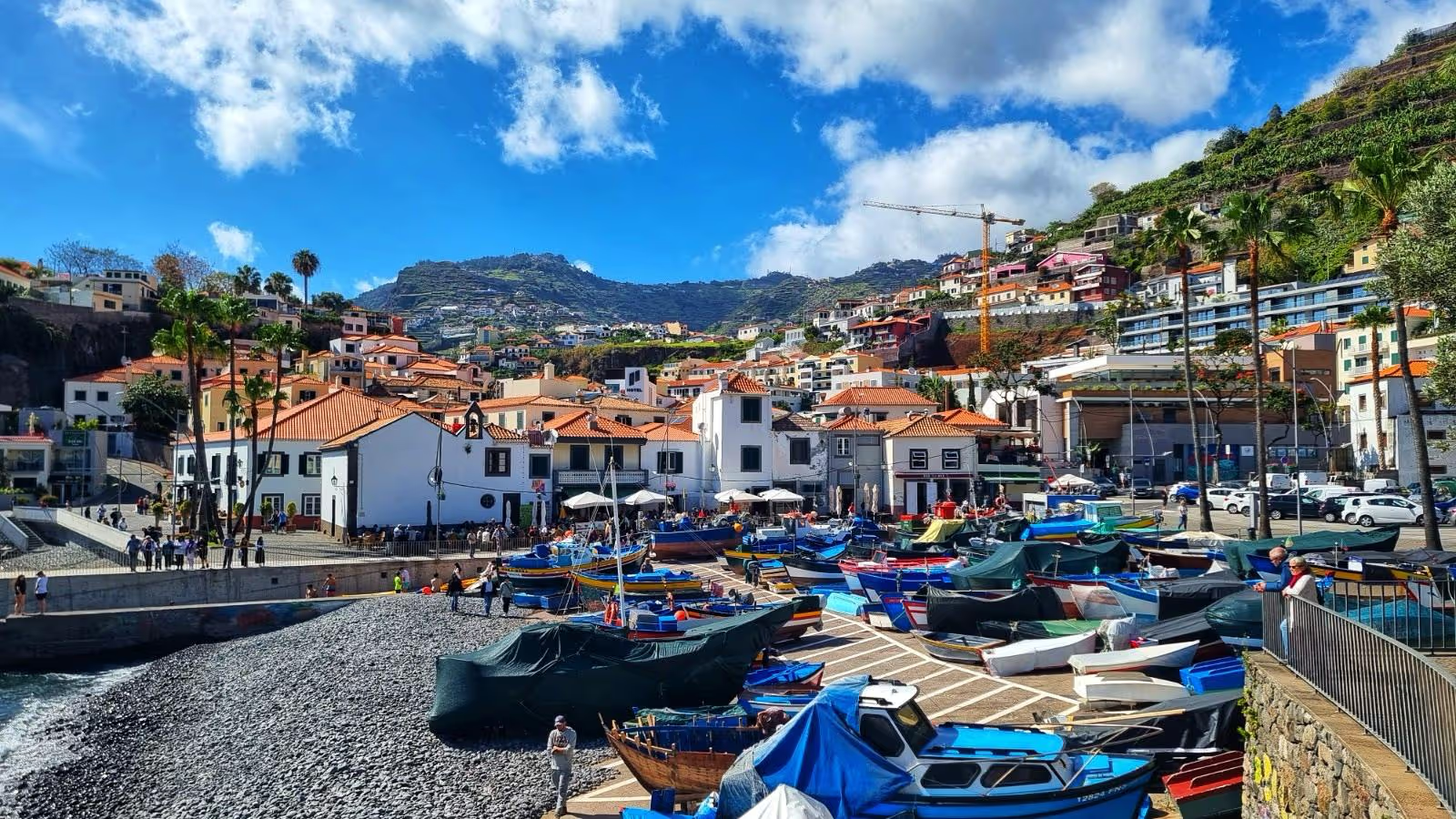
Just a few kilometres west of Funchal sits Câmara de Lobos, a town whose name and identity have always been inseparable from the sea. In 1420 the Portuguese navigator João Gonçalves Zarco sheltered his ship in a narrow rocky cove on Madeira’s south coast and found it crawling with monk seals (sea lions). These animals, which early explorers called lobos marinhos, inspired him to christen the site “Câmara de Lobos”—literally “chamber of the wolves”. Zarco was so taken with the amphitheatre‑like harbour and the safety it offered against Atlantic storms that he remained there until 1424, transforming it into Madeira’s first permanent settlement. Over six centuries later, the village still looks out onto a picturesque bay full of brightly painted fishing boats and weather‑worn taverns, and retains its reputation as a working port where fishermen greet dawn over a glass of poncha. This article unpacks the history, culture and irresistible charm of Câmara de Lobos, weaving together its fishermen’s tales, mountain parishes, dramatic cliffs and quirky street art.
The Birth of a Fishing Village
Sea‑wolves and early colonisation
When Zarco landed in 1419/1420, Madeira was blanketed in laurel forest and uninhabited. The bay he discovered is shaped like a natural amphitheatre: a rocky headland extends into the ocean, forming a sheltered harbour that offered ships protection from storms. The explorers also observed a large colony of monk seals lounging on the rocks. The Portuguese called these mammals lobos‑marinhos (sea‑wolves), and because the cove resembled a chamber with a living roof of cliffs and vegetation, they named the area Câmara dos Lobos (Chamber of the Sea‑wolves). By 1430 the first settlement had been formally elevated to parish status.
Early settlers built a modest chapel dedicated to Nossa Senhora da Conceição in the 15th century, followed by the Convent of São Bernardino in 1425 and São Sebastião Church in the 16th century. These monuments testify to the religious zeal of the colonists and remain some of the oldest religious buildings on Madeira’s south coast. The area soon became a base for subsistence fishing and agriculture; colonists grew cereals, raised cattle and exploited the abundant timber on the slopes above the bay. Through the 16th and 17th centuries vine cultivation became important, and by the 18th century the community was exporting wine to Europe and the Americas. Potatoes were introduced in the 19th century, adding yet another staple to the local diet. Yet despite agricultural diversification, fish remained the beating heart of Câmara de Lobos.
Black scabbard fish and the rhythms of the night
The black scabbard fish (peixe espada preto) is a strange creature. Dwelling more than 1,000 metres below the Atlantic surface during the day, it rises to about 100 metres at night to feed. Madeira’s fishermen venture out after dark in small open boats, called xavelhas, to haul in this elusive predator. The work is gruelling and dangerous; the fishermen bait long lines and pray for calm seas. Back in the harbour before sunrise, they haul the night’s catch ashore and head straight to the taverns for a restorative shot of poncha. According to local tradition the original poncha, known as poncha à pescador, was invented by Câmara de Lobos’ fishermen. The drink is a simple but potent mixture of sugar‑cane rum (aguardente de cana), fresh citrus juice and honey. Historians trace its roots to the 16th‑century Portuguese Age of Discovery: sailors adapted an Indian drink called panch and replaced the tea and spices with local citrus and honey. With sugar‑cane cultivation flourishing on Madeira, a new spirit was born. The fishermen swore that poncha cured colds and gave strength to endure long nights at seai. Today poncha is protected by law; only versions made with local sugar‑cane rum may bear the name.
Fishing remains integral to the local economy. The municipality hosts an annual Black Scabbard Fish Festival, first held in 1993, celebrating the gastronomic potential of this deep‑sea delicacy. During the festival, chefs prepare scabbard fish in myriad ways—grilled with garlic, fried with banana (a classic Madeira pairing), or simmered with spices—and stalls offer visitors a taste of fishermen’s culture. While industrial fishery has grown elsewhere, Câmara de Lobos still relies on small‑scale artisanal boats, preserving methods passed down through generations. The village’s identity is intimately tied to the sea and the scabbard fish that live hidden in its depths.
Growth of a Municipality
Administrative evolution and parishes
Câmara de Lobos was formally constituted as a municipality by ministerial decree on 25 May 1835. Initially it comprised the parishes of Câmara de Lobos, Curral das Freiras, Estreito de Câmara de Lobos and Campanário. Over the following decades boundaries shifted: the parish of Quinta Grande was created from sections of Campanário and Câmara de Lobos, and in 1914 Campanário was transferred to the neighbouring municipality of Ribeira Brava. In 1996 the high‑altitude settlements of Estreito were carved out to form the parish of Jardim da Serra. Today the municipality covers about 51.82 km² and comprises five parishes—Câmara de Lobos, Curral das Freiras, Estreito de Câmara de Lobos, Jardim da Serra and Quinta Grande—with a population of roughly 33,243 (estimate for 2024).
Câmara de Lobos (central parish)
The central parish, spanning 7.74 km², is primarily residential and commercial It hugs the coastline and is boxed in by Funchal to the east, Quinta Grande to the west and Estreito to the north. Once dominated by vineyards and banana terraces, much of the farmland has been replaced by modern housing and service industries. Nevertheless, the harbour remains lined with fishing boats, and the narrow streets are a vibrant mix of seafood restaurants, poncha bars and artisans’ workshops. Colourful houses cluster on the cliffs, each with a rooftop terrace to dry fish or watch the sunset.
Curral das Freiras: the nuns’ valley
Leave the coast behind and climb into the mountains and you reach Curral das Freiras (“corral of the nuns”), a dramatic valley carved by ancient rivers. This parish covers 25.07 km² and is home to about 2,000 inhabitants. Surrounded by towering peaks, the valley resembles a volcanic crater and is invisible from the sea. Its name commemorates an event in 1566 when nuns from the Santa Clara Convent in Funchal sought refuge here during a pirate attack. Because pirates often raided coastal settlements, the remote valley provided sanctuary. Visitors today can explore the Church of Nossa Senhora do Livramento (built in the 19th century) and climb to Eira do Serrado Viewpoint at 1,095 m for a panoramic view Curral das Freiras is also famous for chestnuts: chestnut dishes—soups, cakes, liqueurs—are local specialties, and the annual Chestnut Festival offers tastings and a gastronomic competition. The valley’s chestnut groves turn golden in autumn, and wood‑smoke from roasting stands scents the streets.
Estreito de Câmara de Lobos: vineyards and the grape harvest festival
North of the main town, the parish of Estreito spreads across steep hillsides covered in terraced vineyards. It has long been the heart of Madeira’s winemaking industry; many of the island’s finest Madeira Wine grapes grow here, and locals say that over half of the grapes used in Madeira wine originate from this area. Each September, Estreito hosts the Wine Harvest Festival, during which locals and visitors join in picking grapes from the poios (terraced plots) and crushing them barefoot in stone presses. Traditional folk dances, live music and, of course, plenty of wine accompany the celebrations. The festival forms part of the larger Madeira Wine Festival held across the island, but Estreito’s grape‑stomping remains its most authentic element, connecting participants with centuries of viticulture.
Jardim da Serra: a land of cherries and mist
Carved out of Estreito in 1996, Jardim da Serra sits at a higher altitude and boasts cooler temperatures. The name means “Garden of the Mountains,” a fitting description for a parish known for its orchards and chestnut groves. Since 1954 Jardim da Serra has hosted the Cherry Festival, one of Madeira’s oldest fruit celebrations. Held each June when cherries ripen, the festival showcases cherry products, celebrates local customs and features an allegorical and ethnographic parade with colourful floats and costumes. For farmers the festival motivates better cherry production and fosters community pride. Visitors sample cherry liqueurs, pies and jams while watching folk groups perform and artisans demonstrate their crafts.
Quinta Grande: gateway to Fajã dos Padres
The coastal parish of Quinta Grande is famous for Fajã dos Padres, a narrow strip of fertile land at the foot of a 350‑metre cliff. A fajã is a flat area created by lava flows or landslides at the base of a cliff, and Fajã dos Padres is one of Madeira’s most extraordinary examples. Accessible only by boat or by cable car descending from the cliff, the fajã enjoys a microclimate—warmer and more sheltered than the uplands—thanks to the steep cliffs that protect it from winds. Priests lived on this fertile outpost for more than 150 years in the 1700s, planting vineyards and crops that thrived in the rich volcanic soil. Today the site remains an organic farm producing mangoes, bananas, avocados and the rare Malvasia Cândida grape used in Madeira wine. Visitors reach the fajã via a dramatic cable car ride and can explore the orchards, dine at a farm‑to‑table restaurant and swim off the pebble beach. Fajã dos Padres embodies the local ability to adapt to rugged landscapes and make the most of scarce land.
Cabo Girão and the Vertical World
One of the municipality’s most iconic natural attractions is Cabo Girão, a towering sea cliff rising 580 m above the Atlantic. Regarded as the highest cape in Europe, it has gained worldwide fame thanks to a glass skywalk installed at the cliff edge. The skywalk’s transparent floor allows brave visitors to look straight down to terraced fields and vineyards clinging to the narrow fajãs below. On clear days the vista encompasses the urban amphitheatre of Funchal and the coastline of Câmara de Lobos. Adventurous sports enthusiasts use the cliffs for paragliding and base‑jumping; Portuguese stuntman Mário Pardo even performed a motorbike jump here. Nearby stands the Nossa Senhora de Fátima chapel, built in 1951 and visited by pilgrims. To manage visitor numbers and maintain infrastructure, authorities now charge a small entrance fee to access the skywalk. Yet the price is modest compared with the adrenaline rush of standing suspended over the abyss.
Poncha: The Fishermen’s Tonic
No tale of Câmara de Lobos would be complete without celebrating poncha, the island’s signature drink. According to tradition, poncha à pescador—the fisherman’s poncha—was invented in this village by sailors seeking a warm, energising tonic on cold nights at sea. The base is aguardente de cana, a fiery rum distilled from sugar‑cane juice. Local honey adds sweetness, while freshly squeezed lemon and orange juices provide tang. The mixture is beaten vigorously with a wooden whisk called a mexelote, which emulsifies the ingredients and lends the drink its frothy head. Today bartenders experiment with passion fruit, tangerine and even strawberry ponchas, but purists insist on the classic recipe. Drinking poncha is as much ritual as refreshment: you stand at a counter, chat with strangers and toast to the day’s catch. Many locals still believe the vitamin C and honey help ward off colds. Authentic poncha is now legally protected, ensuring that only versions made with local sugar‑cane rum may bear the name.
Street Art and Cultural Revitalisation
Although the old fishing village retains much of its traditional character, Câmara de Lobos has embraced contemporary creativity. In Rua São João de Deus, the cultural association Teatro Metaphora has transformed the streetscape into an open‑air gallery. Volunteers collected thousands of discarded aluminium cans from local bars and repurposed them into colourful murals and installations, raising awareness about recycling and environmental conservation. Walking down this lane you encounter flowers made from soda cans, fish formed from bottle tops and geometric patterns that shimmer in the sunlight. Nearby stands a striking sculpture of a sea lion built from trash by Portuguese artist Artur Bordalo (Bordalo II), reminding visitors of the animals that gave the town its name. The community’s embrace of street art has injected youthful energy into the historic centre and attracted urban art enthusiasts.
Gastronomy: Where Sea Meets Land
Câmara de Lobos’ cuisine reflects its dual identity as a fishing port and agricultural hub. Classic dishes include:
- Espada com banana: Fillets of black scabbard fish fried and served with sweet banana, a pairing unique to Madeira.
- Espetada: Skewered cubes of beef seasoned with garlic and salt, grilled over wood and often served with milho frito (fried polenta cubes).
- Lapas: Grilled limpets drizzled with garlic and lemon.
- Bolo de mel: A dense molasses cake spiced with cloves and cinnamon, harking back to Madeira’s sugar‑cane era.
- Chestnut soup: A creamy favourite in Curral das Freiras during the chestnut festival.
Visitors should also try local Madeira wines—dry Sercial as an aperitif, rich Malmsey for dessert—and sample poncha and ginja (cherry liqueur) in cosy taverns. Bananas, passion fruit, mangoes and avocados grown in the microclimates of Quinta Grande and Fajã dos Padres find their way into salads, desserts and cocktails.
Connecting the Coast: Walkways and Cable Cars
The coastal promenade and scenic walks
A scenic coastal promenade now links Funchal to Câmara de Lobos, allowing walkers to enjoy ocean vistas and access small coves along the way. Joggers, cyclists and families stroll past murals painted on sea walls, cafés selling bolo do caco (garlic bread), and fishermen mending nets. The path provides a front‑row seat for sunsets over the Atlantic and offers glimpses of local life: children diving off rocks, elders playing cards outside bars and cats sleeping on nets.
Festivals and Traditions
Câmara de Lobos celebrates its heritage through vibrant festivals:
- Black Scabbard Fish Festival (Festa do Peixe Espada Preto): Held annually since 1993, this event honours the deep‑sea fish that defines the town’s economy, promoting gastronomy and the challenges faced by fishermen.
- Chestnut Festival (Festa da Castanha): Hosted by Casa do Povo do Curral das Freiras, this festival invites visitors to taste roasted chestnuts, chestnut liqueurs and cakes, and features gastronomic competitions.
- Cherry Festival (Festa da Cereja): Celebrated in June in Jardim da Serra since 1954, this festival showcases cherries, hosts ethnographic parades and promotes local agriculture.
- Wine Harvest Festival (Festa das Vindimas): Part of the larger Madeira Wine Festival but with special emphasis in Estreito de Câmara de Lobos, where grape picking, treading and tasting are accompanied by folk performances and food.
These events highlight the municipality’s relationship with land and sea and draw tourists eager to taste seasonal produce and experience Madeiran hospitality.
Modern Demographics and Economy
According to the Instituto Nacional de Estatística, the municipality’s population peaked at 35,666 in 2011 and declined to 32,162 in 2021, with a slight rebound to 33,243 estimated for 2024. The gender split is nearly even (16,067 males and 17,176 females), and the majority of residents (approx. 23,095) are of working age (15–64 years). While fishing and agriculture remain important, the economy is increasingly tied to tourism: hotels, restaurants and adventure tour operators provide employment, and the town acts as a suburb of Funchal for commuters. Vineyards and banana plantations still blanket the hills around Estreito and Quinta Grande, and Madeira Wine production drives grape cultivation. Local councils have invested in housing, road infrastructure and cultural projects such as street art initiatives to improve quality of life and attract visitors.
Conclusion
Câmara de Lobos is far more than a postcard‑perfect fishing harbour. It is a living tapestry woven from the cries of seabirds, the clatter of bottles on a poncha counter and the rumble of a cable car descending a cliff. Its history stretches back to Madeira’s discovery, when Zarco and his sailors sheltered among sea‑wolves and established the island’s first settlement. Over centuries the town grew around fishing, wine and agriculture, carving terraces into mountains and building chapels where sailors prayed for safe returns. The municipality now encompasses hidden valleys like Curral das Freiras, lofty promontories like Cabo Girão, fertile fajãs accessible only by cable car and high‑altitude orchards in Jardim da Serra. Through festivals that celebrate chestnuts, cherries, wine and scabbard fish, residents honour their landscape and traditions. Street art made from recycled cans and sculptures of sea lions signal a new era of creativity. Meanwhile poncha and xavelhas remind us that Câmara de Lobos is still, at its heart, a community bound to the sea. Whether you come to sip poncha in a harbourside tavern, trek across a mountain ridge or ride a cable car down a vertiginous cliff, this municipality invites you to slow down, breathe in the salty air and experience Madeira’s authentic soul.