The Forgotten Residents of Câmara de Lobos: Monk Seals and Their Fight for Survival
Introduction
When Portuguese explorers first entered the sheltered bay that would become Câmara de Lobos, they found more than just fertile land and fresh water. Peering from their caravels, they saw sleek, whiskered animals basking on the beach and bobbing inquisitively in the surf. These Monachus monachus, now commonly known as Mediterranean monk seals, reminded the explorers of sea‑wolves, and the town was christened the “chamber of the wolves.” Although the seals soon disappeared from the main island, their presence left an indelible mark on local identity, appearing on Madeira’s coat of arms and lending their name to one of its most picturesque villages. Today, the monk seal is one of the rarest marine mammals in the world, making the story of its past abundance, near extinction, and slow recovery both fascinating and poignant.
A Seal With a Long Story
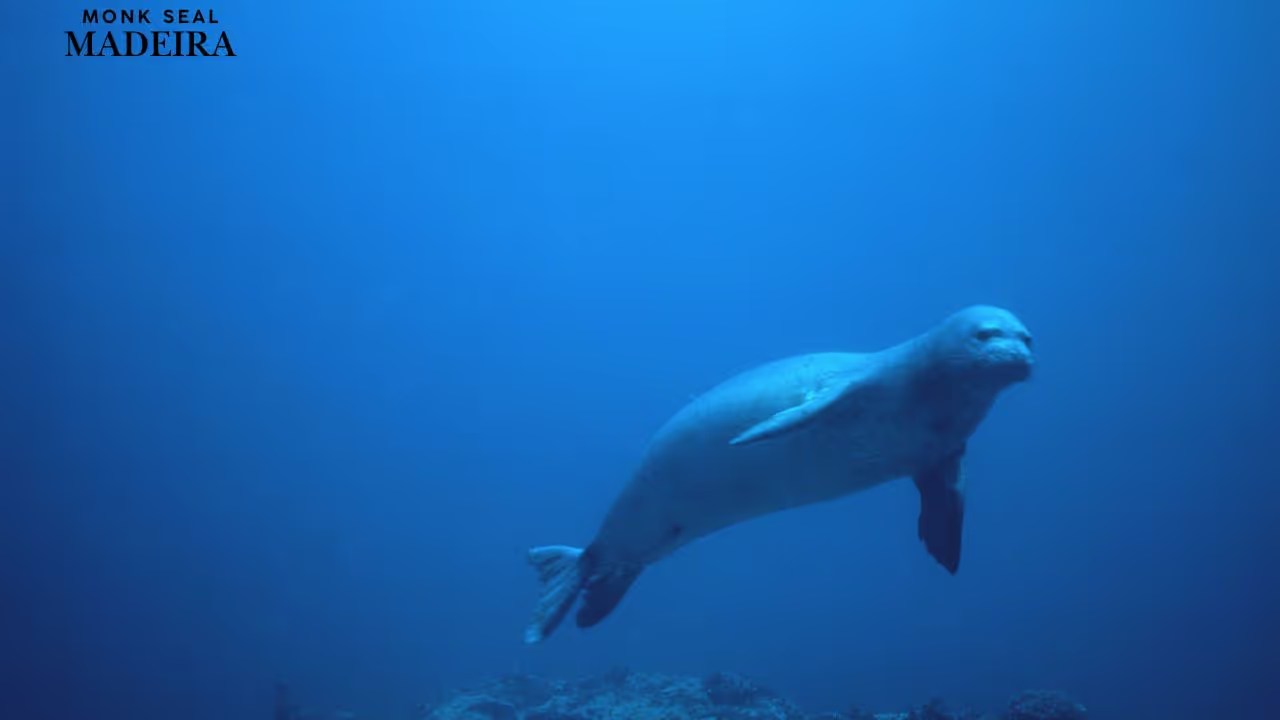
The Mediterranean monk seal is one of the largest seal species; adults can reach 3 metres in length and weigh up to 300 kilograms. Pups are born with a glossy black coat and a pale umbilical patch; they measure around 80–120 centimetres and weigh 15–20 kilograms. As they age, their fur becomes greyish‑brown and scarred, and adult males tend to retain a white belly patch while females develop lighter ventral fur. These seals are K‑selected mammals—meaning they mature slowly and produce few young. Females in Madeira only begin to reproduce at six or seven years old, and each pregnancy, lasting about 11 months, usually results in a single pup. With a life expectancy of 20–25 years in the wild, monk seals invest heavily in parenting, often nursing a pup for many months. In captivity they can live up to 40 years, though in nature the record is around 30 years.
Feeding and daily life
Monk seals are adapted to a life at sea. They feed opportunistically on fish, octopus and crustaceans, consuming 4–6 % of their body weight per day—up to 12 kilograms of prey for a large adult. Their streamlined bodies allow them to dive as deep as 400 metres, though they often forage in near‑shore waters and along rocky reefs. Despite spending most of their time in the water, they rely on land to rest, give birth and nurse their pups. Historically they hauled out on open beaches, but centuries of hunting and disturbance forced them to seek refuge in secluded sea caves. The cliffs of the Desertas Islands, a small archipelago south‑east of Madeira, provide such caves and have become the main refuge for the Madeiran population. Births in Madeira typically occur in October and November, when pups stay on land for the first months of their lives.
Early exploitation and decline
When Portuguese mariners discovered Madeira around 1420, they encountered a colony of monk seals in the bay of what they would call Câmara de Lobos. The seals were hunted for their skins and fat, used for clothing, oil and even medicinal purposes. As the island’s human population grew, seals were further pressured by fishermen defending nets and by habitat loss; by the late 19th century the animals had been eradicated from Madeira proper. By 1980 only 6–8 seals remained, confined to the isolated Desertas Islands. Their disappearance from the main island is remembered in folklore; older fishermen still recall their grandparents talking about the lobos that once lazed on the rocks below town.
A Recovery in Progress
Concerned by the species’ plight, the Madeira Natural Park (now part of the Institute of Forests and Nature Conservation) launched the first local conservation programme in 1988. Efforts included banning gill‑nets around Desertas, eradicating introduced goats and rabbits that damaged vegetation, and restricting human access. The islands were designated a special protection area in 1990 and upgraded to a natural reserve in 1995. Thanks to these measures and continued monitoring, the Madeiran population slowly increased. Initial surveys suggested as many as 40 individuals by 2014, but a more rigorous 2018 census counted only 21 seals, demonstrating the challenges of counting elusive animals. A recent study using photo‑identification estimated 27 seals by 2021, indicating a modest but positive trend. This population makes up one of three remaining monk seal subpopulations worldwide; globally there are roughly 600–700 individuals, with 350–450 mature animals.
The monks’ safe haven on the Desertas remains strictly regulated. Visitors may only land on Deserta Grande by licensed boat under the guidance of a ranger, and even then they are prohibited from entering the caves. This isolation helps the seals carry out their delicate life cycle without disturbance. While a few seals occasionally roam towards Madeira or Porto Santo—curious locals still report sightings in the waters off Funchal or Ponta de São Lourenço—the core of the population stays hidden in their rocky labyrinth. Scientists hope that if the population continues to grow, seals may recolonise the main island’s coves.
Life in the Caves: Social behavior and reproduction
Despite their solitary name, monk seals form loose colonies in the caves where they rest and nurse their young. These caves offer protection from waves and human eyes. Inside, a shallow “lago” of seawater allows pups to practise swimming while an interior beach provides a platform for nursing. Mothers are extremely attentive, staying close to their pups for the first months and guiding their initial swims. Monk seals display a strict division of space: during the pupping season males often use separate caves to avoid disturbing lactating females. Adults forage mostly at night or when the tide is high; at low tide the caves’ entrances become dry, and seals take advantage of the quiet to hunt.
The low reproductive rate is a key vulnerability. Females generally give birth to one pup every two years, though in food‑rich years some may reproduce annually. A long gestation period and the need for long nursing intervals mean that population growth is slow even under ideal conditions. In addition, high storm surges in autumn can wash pups off the cave beaches; natural mortality coupled with human threats keep numbers low. Nonetheless, the Madeiran population appears stable, and each surviving pup is celebrated by conservationists.
Threats Old and New
Today the greatest dangers come not from hunters with clubs but from modern pressures. Entanglement in fishing gear and occasional deliberate killings still occur. The monk seals’ diet overlaps with artisanal fisheries, and younger seals attracted to nets can drown. Despite education campaigns, some fishermen see the seals as competition and may retaliate. Tourism and recreational boating pose an additional threat: disturbances can cause seals to abandon caves, while boat noise and flashes from cameras create stress. At a population level, low genetic diversity and a shortage of adult males increase vulnerability. Natural threats such as storms, disease and limited food resources on the narrow Madeiran shelf further limit growth.
Global climate change could exacerbate these issues. Rising sea levels and more frequent storms threaten to inundate breeding caves, while warming oceans may shift the distribution of prey. Conservationists are exploring artificial or modified caves that offer safe, elevated beaches for pupping. There are also ongoing discussions about potential translocations to increase genetic diversity, though such actions are controversial and require international cooperation.
How to Behave Around a Monk Seal
Despite their endearing faces, monk seals are wild animals with powerful jaws and a strong territorial instinct. The Institute of Forests and Nature Conservation emphasises that, although they appear friendly, they can react unpredictably to human approach. Encounters are rare but possible, especially for kayakers or divers exploring remote coastline. If you spot a seal, do not approach or attempt to feed it; instead, enjoy the sight from a distance. In the water, calmly leave the area and avoid splashing or sudden movements. On land, remain at least 50 metres away and never block a seal’s escape route. Pups are particularly vulnerable; approaching them may cause their mothers to abandon the cave. Keeping your dog leashed, lowering your voice and reducing boat speed near caves all help minimize disturbance. Respecting these guidelines not only protects you from accidental bites but also ensures these critically endangered animals can continue their slow recovery.
Cultural Legacy and Future Prospects
For Câmara de Lobos, the monk seal is more than a zoological curiosity—it is a symbol woven into the very name of the town and the memory of its people. The coat of arms of the Madeira region features two seals to acknowledge this heritage. Stories of curious seals playing with fishermen’s nets or barking like dogs at night still circulate in bars along the harbour. Contemporary art projects in the village include murals and sculptures celebrating the animal, reminding visitors of their connection to this ancient species.
The recovery of the monk seal population in Madeira demonstrates that concerted conservation efforts can bring species back from the brink. However, with numbers still hovering around two dozen individuals, their future remains fragile. Ongoing projects such as LIFE Madeira Monk Seal and VECLAM continue to monitor the colony, enforce protection measures and educate residents and visitors. Ultimately, whether the seals once again sun themselves on the rocks below Câmara de Lobos depends on the choices made by humans: will we respect their space, support sustainable fishing and mitigate climate impacts? If so, the next generation of locals might not have to imagine the sea‑wolves of their town’s name; they may simply look out from the quay and see whiskered heads bobbing in the surf, just as João Gonçalves Zarco did six centuries ago.